Forget the Charts — Here's Why Jack's Catalog Is Built to Last
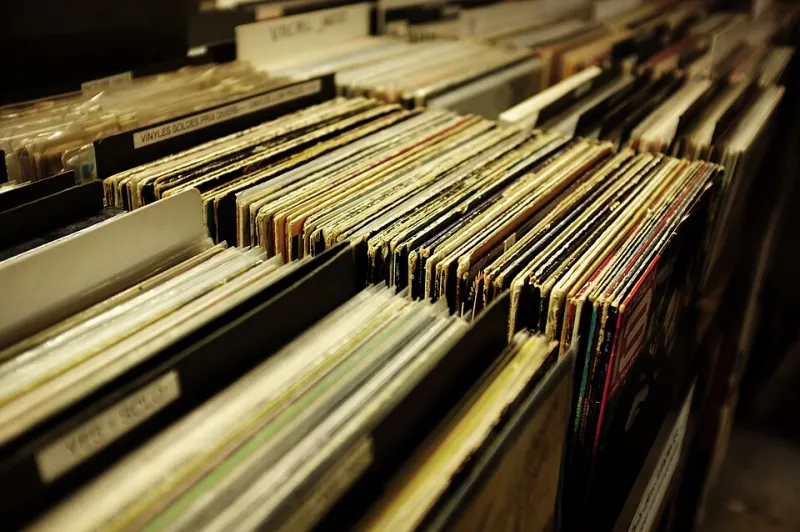
Photo: Mr Cup / Fabien Barral iammrcup, CC0, via Wikimedia Commons
Let's be real: the music charts have always been a weird way to measure an artist's actual impact. They tell you what's hot right now — what got the most first-week streams, what got pushed hardest by label marketing budgets, what rode a TikTok trend to an improbable spike. What they don't tell you is whether any of it will matter in five years. Or two. Or, honestly, next month.
Jack's relationship with the charts is an interesting one. He's had his moments up there. But the more compelling story — the one that actually says something meaningful about his place in music — isn't in the peak positions. It's in the tail. The long, sustained, quietly-growing tail of streams and saves and playlist adds that keeps accumulating long after a song's official promotional window has closed.
That's the real metric. And by that measure, Jack is winning in a way that most chart-toppers simply aren't.
What Longevity Actually Looks Like in the Streaming Age
The streaming era has given us something genuinely valuable: transparency into how music actually gets consumed over time. Before Spotify and Apple Music, you could sell a million copies of an album in week one and have no real idea whether anyone was actually listening to it six months later. Now, we can see the data. And the data tells a story.
For most viral hits, the streaming curve looks like a cliff. Enormous spike at release, rapid descent, then a slow crawl toward irrelevance. The song ends up on a nostalgia playlist a few years later, a relic of a specific moment in time.
For catalog artists — the ones who build something with real staying power — the curve looks different. It's less dramatic at the peak, but it doesn't fall off. It levels out at a meaningful number and stays there. Sometimes it even climbs, as new listeners discover older tracks and pull their friends along for the ride.
Jack's numbers follow the second pattern. Consistently. Across his catalog.
Depth Over Spikes: The Catalog Argument
Here's a thought experiment: would you rather have one song that hits number one and disappears, or ten songs that each quietly accumulate 50 million streams over three years? From a pure revenue standpoint — and from the standpoint of what it means for an artist's long-term career — the second option isn't even close.
Jack has built his catalog with that kind of depth in mind. There are tracks in his back catalog that weren't necessarily singles, that didn't get the big promotional push, that just... live in the playlists of people who found them organically. Those songs keep working. They keep being discovered. They keep earning.
That's not an accident. It's the result of a consistent artistic vision across projects — a sound and a sensibility that holds together across albums, so that when a new listener falls in love with one song, the entire catalog feels like a natural next step rather than a grab bag of disconnected styles.
Why American Listeners Respond to This
There's something worth noting about the US market specifically. American streaming audiences are, in a lot of ways, the most algorithmically mediated in the world. The big playlists — Today's Top Hits, RapCaviar, Hot Country, etc. — have enormous power to shape listening behavior. But there's a growing counter-trend, especially among millennial and Gen Z listeners who've grown a little tired of being told what to like.
Those listeners are increasingly seeking out artists with catalogs — artists who reward the deep dive. They want to feel like they've found something, not just been served something. Jack's music is perfectly positioned for that kind of discovery. There's always another layer, another track that rewards a closer listen, another connection to be made between songs.
Word-of-mouth still matters enormously in the US market, and it tends to work differently for catalog artists than for chart acts. With a chart act, you're telling someone "you need to hear this right now." With a catalog artist, you're saying "you need to hear this — and once you do, here are the fifteen other songs you're going to love." That's a fundamentally more powerful recommendation.
What the Industry Could Learn
The conventional wisdom in the music business right now is that the album is dying — that the single-driven, release-constantly model is the only viable path forward. There's data to support that view. But Jack's career complicates the narrative.
Artists who invest in cohesive, carefully considered bodies of work are demonstrating that catalog depth still has commercial value. Not just artistic value — commercial value. The licensing opportunities, the sync placements, the streaming royalties from catalog tracks, the ability to tour on the strength of a beloved back catalog: all of that compounds over time in a way that a string of disconnected singles simply doesn't.
Labels and managers who are paying attention are starting to notice. The artists who will be working and thriving in a decade aren't necessarily the ones at the top of the charts today. They're the ones building something that lasts.
The Long Game
Jack is playing the long game. He has been from the start. That's not always the flashiest story to tell — it doesn't come with the drama of a number-one debut or a viral moment — but it's the story that holds up.
In ten years, when music fans are doing the deep-dive retrospectives and the "artists who shaped the decade" conversations, Jack's name is going to be in those discussions. Not because of a single peak moment, but because of the cumulative weight of a catalog that kept finding people, kept meaning something, kept growing.
Charts tell you who won the week. Longevity tells you who won the era. By that measure, the verdict on Jack is already looking pretty clear.