From the Bleachers to the Band: How Jack's Openness About His Craft Turned Fans Into Artists
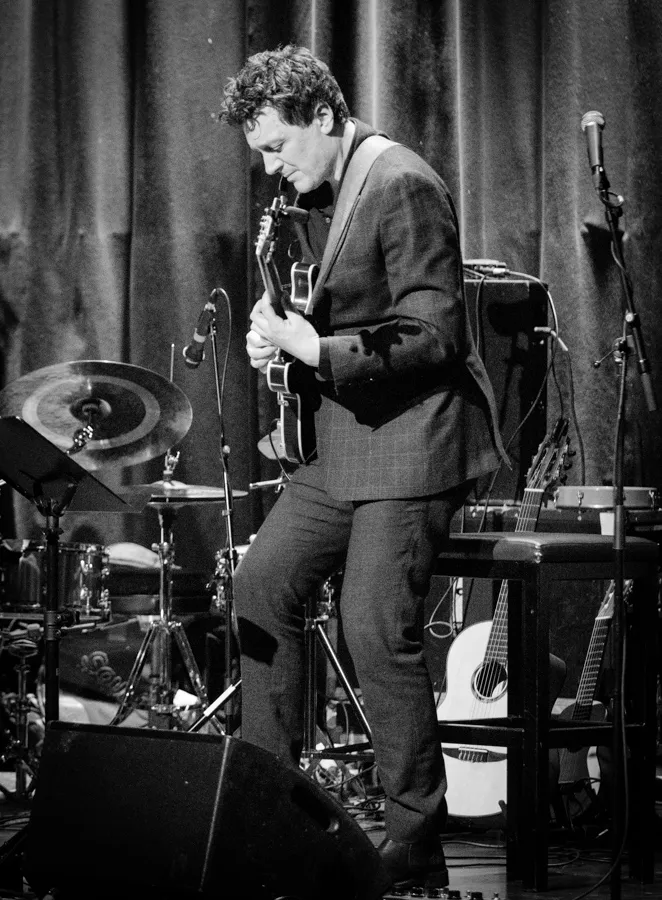
Photo: Tore Sætre, CC BY-SA 4.0, via Wikimedia Commons
There's a moment a lot of Jack's fans describe in almost the same way. They're watching one of his behind-the-scenes clips, or listening to him break down how a track came together, and something clicks. Not just an appreciation for the music — something deeper. A thought that sounds a little like: I could try that.
For thousands of people across the US, that thought didn't stay a thought. It became a home studio, a secondhand guitar, a free DAW downloaded at midnight. It became a first song, however rough. And for a growing number of them, it became an identity — musician — that they never expected to claim.
What Jack has built isn't just a fanbase. It's a creative ecosystem, and the way it happened says a lot about what happens when an artist decides to stop hiding the process.
The Transparency That Started It All
A lot of artists keep the curtain drawn. The music appears, polished and finished, and fans receive it. That's the traditional model, and plenty of people are comfortable with it. Jack took a different approach from early on — sharing the messy middle, the half-finished ideas, the production decisions that didn't work out, the rewrites that happened three days before a release.
That kind of openness isn't just refreshing. It's instructional. When you watch someone navigate the actual difficulty of making something, you stop mythologizing the process. It stops feeling like a gift reserved for the chosen few and starts looking more like a skill — one that can be learned, practiced, and built on.
Fans noticed. And a lot of them decided to start building.
"He Made It Feel Possible"
Talk to fan-musicians in Jack's orbit and you'll hear that phrase, or something close to it, over and over again.
Take Marcus, 24, from Columbus, Ohio, who started producing lo-fi tracks in his apartment bedroom two years ago after spending months deep in Jack's catalog and content. "I'd been listening forever but I always thought making music was for people who grew up taking lessons or went to some fancy music school," he says. "Watching Jack talk about how he figured stuff out on his own, how he'd experiment and fail and try again — I thought, okay, that's actually how this works. So I just started."
Or Priya, 21, a college student in Austin who picked up an acoustic guitar after a particularly candid interview where Jack talked about the emotional honesty he tries to bring to his lyrics. "He wasn't talking about technique or theory. He was talking about feeling something and trying to get it out. That's accessible. That's something anyone can relate to."
These aren't isolated stories. Fan forums, Discord servers, and social media threads connected to Jack's community are full of people sharing first recordings, asking for feedback, celebrating small milestones. The creative energy is real, and it's self-sustaining at this point — fans inspiring other fans, with Jack's work as the original spark.
DIY as a Philosophy, Not Just a Method
Part of what makes Jack's influence on aspiring creators so durable is that his DIY mentality isn't just about how he makes music — it's about how he thinks about music. He's talked openly about not waiting for permission, not needing a major label's blessing to put something out, not measuring worth by chart position or streaming numbers alone.
In a music industry that can feel impossibly gatekept, that message lands hard, especially for younger fans who've grown up watching the industry evolve in real time. The tools to make and distribute music have never been more accessible — a decent laptop, a USB microphone, and a free account on DistroKid can get you further than a record deal could have gotten someone twenty years ago. Jack's ethos fits that reality perfectly.
"He's proof that you don't have to wait for someone to hand you a shot," says Derek, 27, from Portland, who started releasing original songs on SoundCloud after years of just listening. "You make the thing. You put it out. You see what happens. That's it."
The Broader Cultural Shift
It's worth zooming out for a second, because what's happening in Jack's fanbase isn't happening in a vacuum. The democratization of music creation is one of the defining cultural stories of the last decade. Platforms like GarageBand, Ableton, and BandLab have put studio-quality tools in the hands of anyone with a device. TikTok has shown that a song made in a bedroom can reach millions. The old hierarchy — label, radio, mainstream success — has cracked open.
What artists like Jack contribute to this shift is something the tools alone can't provide: permission. Not legal permission, but the emotional kind. The sense that your background, your budget, your lack of formal training doesn't disqualify you. That the thing you want to make is worth making.
When an artist is genuinely transparent about their process — including the struggle, the self-doubt, the technical limitations they've had to work around — they normalize the messy reality of creativity. And that normalization is incredibly powerful for someone standing at the edge of trying something new.
A Community That Creates Together
What makes Jack's creative community particularly interesting is how collaborative it's become. Fans aren't just making music in isolation and posting it into the void. They're sharing projects, offering feedback, co-writing remotely, even releasing music together under shared handles. The community infrastructure that formed around Jack's work has become a creative incubator in its own right.
Fan-run Discord servers have dedicated channels for beat-sharing and lyric feedback. Reddit threads pop up regularly where people post their first attempts and get genuine, constructive responses. There's a warmth to it — a sense that everyone in the space is rooting for each other, because they all started from the same place: just being a fan who got inspired.
"This community is the reason I kept going," Priya says. "I posted something embarrassingly rough early on and people were so encouraging. It didn't feel like the internet I expected."
What Jack Set in Motion
None of this was engineered. Jack didn't launch a program to turn fans into musicians or build a curriculum around his creative process. He just made music honestly, talked about it openly, and let people in. The movement that followed is organic, which is probably why it's so durable.
The fans who picked up instruments because of Jack aren't doing it because they were told to. They're doing it because something in his work made them feel like they had something worth saying too. That's about as powerful an artistic legacy as there is — not just music people love, but music that makes people want to make music.
And somewhere out there, someone is downloading a DAW for the first time tonight, a Jack track still playing in their headphones, figuring out where to start.