Same Voice, Different Room: Why Jack's Sonic Signature Is Worth More Than Any Trend
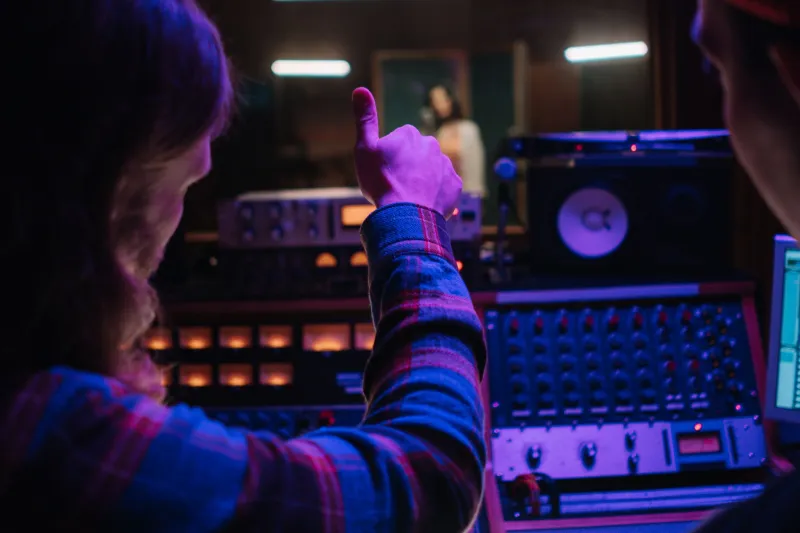
There's a test longtime Jack fans like to run on new people. Play them a track — doesn't matter which era, doesn't matter the tempo or the mood — and watch for the moment they go, wait, who is this? It usually takes about thirty seconds. Sometimes less. That instant recognition isn't an accident, and it isn't the result of Jack making the same record over and over. It's something rarer and harder to manufacture: a genuine sonic identity that holds its shape across years of creative evolution.
In an industry that practically rewards amnesia — where pivoting to whatever's trending is often dressed up as artistic growth — that kind of consistency is starting to look like a superpower.
What "Consistent" Actually Means (Hint: It's Not "Predictable")
Let's clear something up right away, because the word consistent can sound like a backhanded compliment. Like you're calling someone dependable when you mean boring. That's not what we're talking about here.
When Jack's music feels consistent, it's not because every project sounds identical. It's because there are throughlines — certain textural choices, a particular relationship between the vocals and the low end, a way melodies breathe inside the arrangement — that act like a fingerprint. You can hear it on a stripped-back acoustic cut just as clearly as you can on something built around layered production. The setting changes. The signature doesn't.
Think about how you can walk into a restaurant you've never visited in a new city, order something you've never tried, and still know within a bite whether it came from a chef you trust. That's not sameness. That's craft with a point of view.
The Production Philosophy Behind the Pattern
So what actually creates that fingerprint? A big part of it comes down to instrumentation decisions that prioritize feel over fashion. Jack has never been someone who loads up on whatever plugin or production technique is having its moment on social media. There's a grounding in organic texture — real room sound, instruments that breathe, space left in the mix rather than every frequency crammed full.
That approach creates warmth. And warmth, it turns out, is remarkably timeless. Records that sound warm in 2015 still sound warm in 2025. Records that chased a hyper-specific production trend from 2015? They sound like 2015.
The vocal production choices deserve their own mention. There's a consistency in how Jack's voice sits in a mix — present, never buried, but also never so polished that it loses the grain that makes it feel human. That's a deliberate call. Heavy-handed vocal processing can make a track feel current for about six months before it starts to date itself. Restraint lasts longer.
Why Fans Can Feel Surprised Without Feeling Lost
Here's the real magic trick, and it's worth slowing down to appreciate it. Jack's most devoted listeners will tell you that new music still surprises them. The directions shift. The emotional territory expands. There are moments in recent projects that wouldn't have shown up on earlier records — and that's genuinely exciting.
But because the underlying sonic identity is stable, those surprises land differently than they would from an artist who feels like a stranger every time they drop something. With Jack, the surprise is like hearing a close friend say something unexpectedly profound. You didn't see it coming, but it makes complete sense coming from them.
That dynamic — familiarity as a launchpad for surprise rather than a ceiling — is incredibly difficult to engineer. Most artists who try to balance consistency with evolution end up doing one or the other. They either play it so safe that nothing feels fresh, or they swing so hard toward reinvention that longtime fans feel stranded.
Jack threads it. Regularly.
The Trend-Chasing Trap (And Why Most Artists Fall Into It)
It's worth understanding the pressure that exists on the other side of this equation, because it's real and it's relentless. The streaming era created a feedback loop where data about what's performing gets fed back to artists and labels almost in real time. If a certain sound is racking up streams, the incentive to pivot toward it is enormous.
And look, plenty of artists have made that move and come out fine. Adaptation is a legitimate survival strategy. But there's a cost that doesn't always show up immediately. When you follow trends closely enough, you stop being the artist who makes something — you become the artist who responds to something. The center of gravity shifts outside of you.
Over time, that shows. Fans who were drawn to an artist's original identity start to feel like that person doesn't exist anymore. New fans attracted by the trend-chasing don't have the same loyalty because they can just follow the trend itself. The audience becomes transactional rather than devoted.
Jack's catalog tells a different story. Go back to the earliest releases, then trace a line forward. The dots connect. That connective tissue is what turns casual listeners into the kind of fans who actually care — who follow an artist not just because a single hit their playlist algorithmically, but because they feel like they know something about who made it.
Consistency as a Long Game
There's a financial and cultural argument to be made here that goes beyond the artistic one. Artists with strong, recognizable sonic identities tend to build catalogs that age well. Tracks from five years ago don't feel embarrassing or dated because they were never built around a moment — they were built around a voice.
That has real value in a streaming economy where catalog plays matter more than ever. It has value in live settings, where a crowd can move between old and new material without feeling like they're watching two different acts. And it has value in the broader cultural conversation, where longevity is increasingly the thing that separates artists who matter from artists who happened.
Jack is playing that long game. And in a climate where most artists are sprinting toward whatever's trending this quarter, that patience and self-awareness reads less like restraint and more like confidence.
The Rarest Currency
We talk a lot on this site about what makes Jack's music connect the way it does. The live shows. The fan community. The willingness to be honest about the craft. But underneath all of it is this: a sound that belongs to one person and sounds like no one else.
In 2025, that's genuinely rare. Algorithms flatten. Trends homogenize. The pressure to sound like whatever's working pushes artists toward the center until everything starts to blur together. Against that backdrop, having a distinct sonic identity isn't just an artistic achievement — it's an act of resistance.
And for the fans who've been here long enough to notice, it's exactly why a thirty-second clip is all it takes. That's Jack. You just know.