Loyalty Over Algorithms: Why Jack's Fans Keep Coming Back When Everyone Else Is Skipping
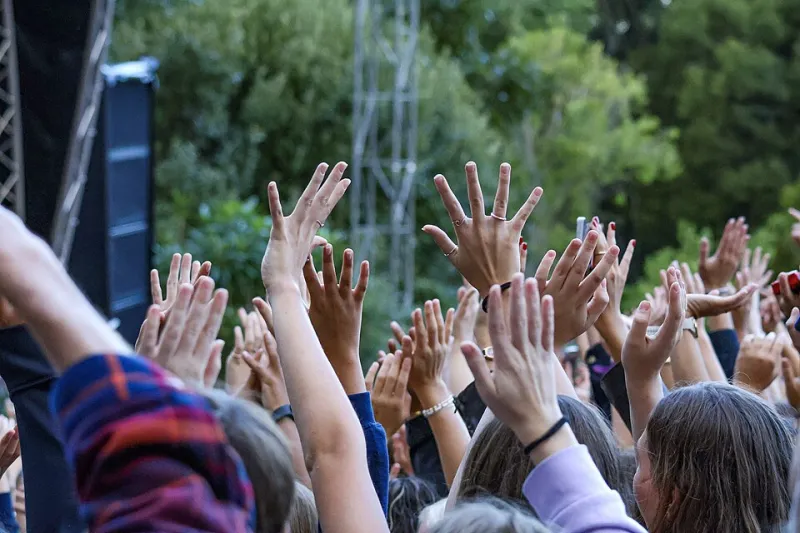
Photo: EGilham, CC BY-SA 4.0, via Wikimedia Commons
Spotify has 600 million users. The average listener skips a track within the first 30 seconds roughly a third of the time. And yet, if you look at the engagement patterns around Jack's catalog — the repeat plays, the playlist saves, the obsessive deep dives into B-sides from three albums ago — something unusual is happening. People aren't just streaming Jack. They're staying.
So what's the deal? How does an artist carve out that kind of loyalty in an era where the algorithm is basically everyone's DJ, attention spans are shrinking, and the line between a real fan and a casual listener has never been blurrier?
The short answer: Jack stopped playing the game everyone else is playing.
The Streaming Trap Most Artists Fall Into
Here's the uncomfortable truth about the modern music industry — a lot of artists are essentially optimizing for the algorithm rather than for the audience. Shorter intros. Hooks in the first eight seconds. Release schedules timed to platform editorial cycles. It's not cynical, exactly — it's survival. When your livelihood depends on stream counts, you start reverse-engineering what the platform rewards.
The problem is that audiences can feel it. Maybe not consciously, but somewhere in the back of their heads, people know when music is engineered to be consumed rather than experienced. And the result is a kind of passive listening culture — songs that flow through your ears without ever really landing anywhere.
Jack has largely opted out of that formula. Not in a contrarian "I'm too cool for streaming" way, but in the more interesting sense that the music itself seems to be built around what he actually wants to say, not what a platform dashboard suggests will perform. That difference, subtle as it sounds, has massive downstream effects on how fans relate to the work.
What Authenticity Actually Looks Like (Beyond the Buzzword)
"Authentic" has become one of those words that's been used so many times it's almost lost its meaning. Every brand, every influencer, every PR-managed celebrity claims to be authentic. So it's worth being specific about what that actually looks like in Jack's case.
It shows up in the communication. Jack doesn't do the standard artist-to-fan broadcast model — the kind where you get a perfectly timed Instagram post the day before a release and nothing else until the next promo cycle kicks off. Instead, there's a genuine back-and-forth quality to how he engages. He talks about the process when it's messy, not just when it's polished. He's been open about creative dead ends, about tracks that didn't work, about the gap between what he imagined and what ended up on record.
For fans, that kind of transparency is rare enough that it actually means something. It reframes the relationship from fan-to-celebrity into something closer to a shared creative journey. And when you feel like you're actually in on something rather than just consuming a finished product, your investment in that artist goes up considerably.
The Numbers Behind the Feeling
This isn't just a vibe — there are measurable patterns that back it up. Artist loyalty in streaming tends to show up in a few specific ways: repeat listen rates on new releases, the ratio of catalog streams to current single streams, fan-driven playlist inclusions, and word-of-mouth conversion (meaning how often new listeners come in through personal recommendations rather than algorithmic discovery).
What's notable about Jack's audience is the catalog engagement. In an era where most artists see their older work essentially flatline once the promotional window closes, Jack's back catalog keeps moving. Fans go back. They introduce friends by saying "you have to start with this one" rather than whatever just dropped. That's not what passive streaming looks like — that's what genuine fandom looks like.
Word-of-mouth is also a huge part of the equation. Traditional celebrity marketing is expensive, top-down, and increasingly ineffective with younger audiences who have finely tuned radar for anything that feels like an ad. Jack's growth has leaned heavily on organic fan advocacy — people recommending his music the same way you'd recommend a restaurant you genuinely love, not because there's any incentive to do so, but because you actually want the people you care about to experience it.
The Parasocial Paradox
There's a weird tension in modern fandom that's worth naming here. Parasocial relationships — where fans feel a deep personal connection to an artist who doesn't know they exist — have always been part of music culture. But social media has turbocharged them in ways that can get pretty unhealthy, both for fans and for artists.
A lot of artists (or their management teams) deliberately cultivate this dynamic. The more emotionally dependent fans feel, the more they spend, the more they evangelize, the more they show up. It works, in a short-term metrics kind of way. But it also creates a fragile foundation — one parasocial blowup, one perceived betrayal, and the whole thing can collapse fast.
Jack's approach seems to run counter to that. The transparency and directness that characterize his fan communication don't really feed the parasocial fantasy — they puncture it a little, in a healthy way. You get the sense that Jack wants fans to love the music, not to build their identity around him as a persona. That's a subtle but important distinction, and it tends to produce fans who are resilient rather than volatile. They're not going to turn on a dime because of a tweet or a tabloid story. Their loyalty is rooted in something more durable.
Why This Blueprint Is Hard to Copy
Here's the catch: none of this is really replicable as a strategy, because it only works if it's genuine. You can't fake transparency — at least not for long. Audiences figure it out. The artists who've tried to manufacture the "authentic" aesthetic without the underlying reality have mostly ended up looking worse than if they'd just stuck with standard PR.
What Jack is doing isn't a marketing playbook. It's more like a value system that happens to produce great marketing outcomes. The loyalty, the word-of-mouth, the deep catalog engagement — those are byproducts of actually caring about the work and actually respecting the audience. You can't reverse-engineer your way to that.
And maybe that's the most interesting thing about the Jack effect. In an industry that's spent the last decade trying to crack the code on fan loyalty through data and optimization, one of the clearest examples of it happening in real time comes down to something almost embarrassingly simple: be real, make music that matters to you, and treat the people listening like they're smart enough to know the difference.
Turns out, they are.