Dropping the Mask: How Jack Is Quietly Reshaping the Conversation Around Artist Mental Health
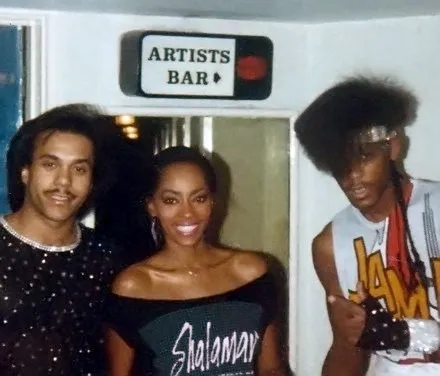
Photo: AvidMusicInc, CC BY 3.0, via Wikimedia Commons
There's a version of the music industry that still runs on mystique. The idea that artists are somehow above the ordinary chaos of being human — that they don't spiral before a big show, don't second-guess a lyric at 2 a.m., don't sometimes wonder if any of it is worth it. For a long time, that myth was the product being sold right alongside the music.
Jack never really bought into it.
And quietly, almost without making a formal announcement about it, he's become one of the more compelling examples in contemporary music of what it looks like when an artist decides to just... be honest. Not performatively vulnerable. Not strategically candid in the way a publicist might script. Just genuinely, sometimes awkwardly, real.
That distinction matters more than it might seem.
When Honesty Isn't a PR Move
The music world has seen its share of artists who've leaned into the "tortured creative" angle as a brand element. There's a long tradition of it, and audiences have gotten pretty good at sniffing out when openness is being packaged and sold back to them.
What makes Jack's approach land differently is that it doesn't feel curated. When he's talked about the mental weight of the creative process — the periods of doubt, the exhaustion that follows a long stretch on the road, the strange emotional hangover that can come after releasing something deeply personal — it hasn't come with a tidy resolution or a motivational kicker. It's just the thing he's experiencing, shared plainly.
For fans, especially younger ones navigating their own mental health landscapes, that plainness is its own kind of relief. It signals that the person making the music isn't operating from some elevated emotional plane where struggle doesn't exist. It says: this is hard sometimes, and that's okay to admit.
The Fan Response Tells the Real Story
You can gauge a lot about how an artist's candor is landing by paying attention to what fans do with it. In Jack's case, the response has been something more than appreciation — it's been reciprocity.
At shows, in comment sections, in the kind of fan communities that pop up around artists who mean something to people, there's a consistent thread: Jack's willingness to be open has given fans permission to be open too. People share their own stories in spaces connected to his music in ways that go beyond typical fan engagement. It's less "I love this song" and more "this song got me through something I didn't know how to talk about."
That's not a small thing. In a cultural moment where conversations about mental health are more visible than ever but still carry real stigma in plenty of corners of American life, having an artist model that kind of openness — and having it be received warmly rather than exploited — creates a feedback loop that genuinely helps people.
Pressure on the Industry, One Honest Moment at a Time
Here's where Jack's example starts to ripple outward in interesting ways. The music industry has historically been a rough environment for artist wellness. Grueling tour schedules, the pressure to stay relevant, the financial structures that can trap artists in cycles of overwork — none of that has magically disappeared. But the conversation around it has shifted.
Artists across genres are increasingly willing to cancel shows for mental health reasons, talk openly about therapy, or push back against the expectation that they should be endlessly available and emotionally performing at all times. That shift didn't happen in a vacuum. It happened because certain artists made it more acceptable — and sometimes more expected — to treat inner wellbeing as a legitimate priority.
Jack is part of that movement, not as a spokesperson or an activist, but simply by living it out in public. When fans see an artist they respect treat their mental health with the same seriousness as their vocal health or their stage production, it recalibrates what they expect from artists in general. And artists notice what fans expect.
Authenticity as a Sustainable Model
There's a practical dimension to this worth naming. The artists who've burned out most spectacularly — and American pop culture has plenty of cautionary tales — are often the ones who maintained the largest gap between their public persona and their private reality. Sustaining that gap is exhausting. It requires constant management, and it tends to corrode the creative work over time.
Jack's approach, whatever its origins, turns out to be genuinely sustainable in a way that image-maintenance rarely is. When you're not performing a version of yourself that doesn't exist, you don't have to keep track of the performance. The music can just be the music. The shows can just be the shows.
Fans pick up on that sustainability even if they can't always name it. There's a quality to the engagement around Jack's work that feels durable rather than trend-dependent. People aren't just here for the moment — they're here because they trust that what they're getting is real, and real things tend to hold up.
What Other Artists Are Watching
It would be overstating it to say Jack has single-handedly changed the industry's relationship with mental health. That's a much larger cultural shift driven by many voices. But in the specific ecosystem of how artists present themselves to their audiences, his example is being watched.
Younger artists especially — the ones building their careers in an era where audiences have unprecedented access to artists' daily lives through social media — are grappling with real questions about how much to share, how to be genuine without oversharing, and how to protect themselves while still connecting authentically. Jack's career offers a working model. Not a perfect one, not a prescriptive one, but a real one.
The core of it isn't complicated: be honest about what the work actually costs, trust your audience with that honesty, and don't let the pressure to seem fine get in the way of actually being okay.
In a business that has spent decades selling the illusion of effortlessness, that's a more radical stance than it sounds.