Unsung No More: How Jack Is Putting Session Musicians Back in the Spotlight
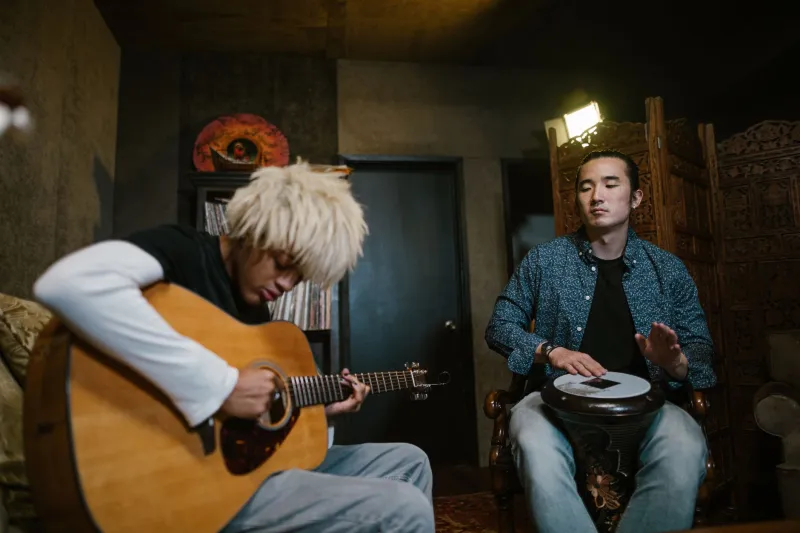
There's a running joke in Nashville, LA, and New York among the session player community: you know you've made it when your name shows up in the liner notes above the font size of the copyright warning. It's a low bar, but for years it was the only bar. These are the people who show up at 9 a.m. with a guitar case and a coffee, lay down a track that gives you chills, and are gone before lunch — no Instagram shoutout, no co-headlining credit, no nothing.
Jack, apparently, didn't get that memo. And honestly? Thank god for that.
The Way Jack Works in the Room
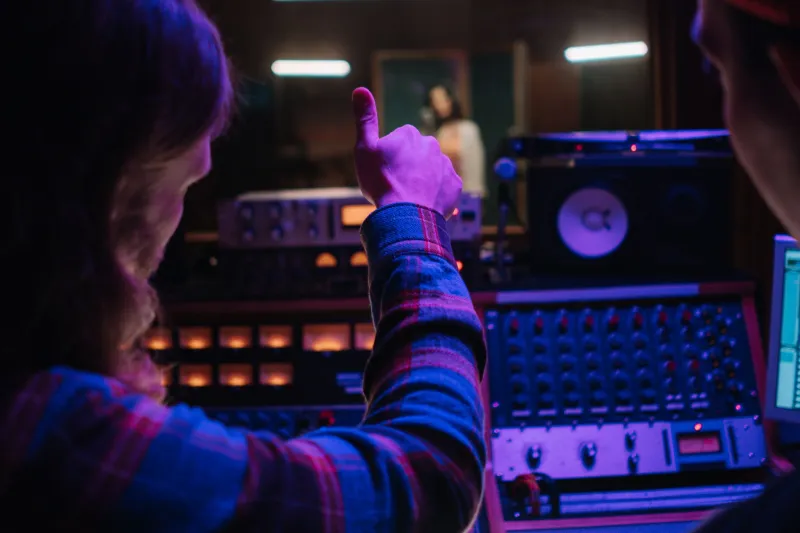
Anyone who's followed Jack's career closely — and if you're on this site, that's almost certainly you — knows that he doesn't exactly treat the studio like a vending machine. He's talked openly in interviews about the way he approaches sessions: it's collaborative, it's slow when it needs to be, and it's built on the idea that every person in the room has something worth hearing.
That might sound like standard artist-speak, but the players who've worked with Jack say it actually holds up in practice. Keyboard player Marcus Webb, who's played on sessions for artists across multiple genres over the past fifteen years, put it plainly in a recent conversation: "Most sessions, you walk in, they hand you a chart, you play it, they say thanks. With Jack, he wanted to know what I was hearing. That's not normal. That's actually kind of revolutionary."
Webb isn't alone. Bassist Dani Reyes, who's worked on independent projects throughout the Southeast, described a similar dynamic. "He'll stop a take not because something was wrong, but because something was interesting — and he wants to chase that. You don't get that a lot. Most people are chasing the version they already heard in their head. Jack's chasing something better."
Why Transparency Changes Everything
Here's the thing about the session musician world that most casual fans don't fully appreciate: invisibility is baked into the business model. Labels, managers, and even some artists have historically had very little incentive to shine a light on the people behind the curtain. The mystique of the solo artist is a marketable thing. Acknowledging that the guitar solo that made you cry was played by someone you've never heard of? That's a trickier sell.
Jack's been pretty deliberate about dismantling that dynamic. He's name-dropped collaborators in social posts, brought players out during live shows, and talked about specific contributions in interviews with a level of specificity that's almost unheard of. He'll say something like, "That chord voicing in the bridge was entirely Tommy's idea, and it made the whole song make sense." That's not just nice — it's a shift in how attribution works in popular music.
And it's having a downstream effect. Emerging artists who've grown up watching Jack work are starting to adopt similar habits. Producer and songwriter Ellie Cho, who works primarily with independent artists in Chicago, says she's noticed a change in how younger clients talk about their sessions. "A few years ago, everyone wanted to say they produced everything themselves. Now I'm getting artists who specifically want to bring in a live drummer or a string arranger because they've seen how Jack talks about those choices. They want that layer of realness."
The Digital Shortcut Problem
It's worth acknowledging what Jack's approach is pushing back against, because the context matters. The last decade of music production has been defined — at least in part — by the democratization of digital tools. GarageBand, FL Studio, plug-in libraries that can simulate virtually any instrument: these are genuinely great developments for accessibility. More people can make music. That's a real win.
But somewhere along the way, "you can fake it" became "you should fake it," and a generation of artists started treating session musicians as an unnecessary expense rather than an irreplaceable resource. The result is a lot of music that's technically proficient and emotionally flat — everything in the right place, nothing that feels like it was played by a human being having an actual moment.
Jack's catalog sounds different because it is different. There's a looseness in the right places, a tension in others, a sense that the people playing those parts were making real decisions in real time. You can hear it. Fans hear it even when they can't name exactly what they're responding to.
What a Renaissance Actually Looks Like
Calling something a "renaissance" can feel like hyperbole, but the numbers are starting to back it up. Booking agencies that represent session musicians report increased demand from independent artists over the past couple of years. Music schools are seeing renewed interest in performance-focused programs. Online communities for working musicians — Reddit threads, Discord servers, Facebook groups — are buzzing with a kind of cautious optimism that wasn't there five years ago.
None of that is solely because of Jack. But influence doesn't have to be the only cause to be a real cause. When an artist with Jack's profile consistently demonstrates that real players make better records, and when he's vocal enough about it that the message reaches fans and aspiring artists alike, that matters. It shifts the culture incrementally, which is how culture actually shifts.
Percussionist and session veteran Roy Castillo, who's been playing professionally for over two decades, summed it up in a way that stuck: "I don't need Jack to make me feel validated. I know what I do is valuable. But when someone at his level says it out loud, in public, repeatedly — that changes what the next generation of artists thinks is worth paying for. And that changes my career. That changes a lot of careers."
The Bigger Picture
Jack's music has always been about something more than the songs themselves — it's about what it means to take the craft seriously, to treat every element of a record as a decision worth making deliberately. The way he works with session musicians is just one expression of that philosophy, but it might be one of the most consequential ones.
Because when the players in the room feel seen, they play better. When they play better, the record is better. When the record is better, the fans feel it — even the ones who couldn't tell you why. It's a chain reaction that starts with one artist deciding that the people who make his music great deserve to be known.
That's the Jack effect. And it's just getting started.